









 1300 433 071


- Home
-

- Blog
-
- News & Industry Updates
-
- AI Search Evolves With AI Mode, ChatGPT Ads & Instagram Explore Removal
AI Search Evolves With AI Mode, ChatGPT Ads & Instagram Explore Removal

Our weekly news rounds up the most important updates from the last week across AI search, paid media and platform-level changes that affect digital marketing in Australia and globally.
The past seven days have been a strong reminder that discovery is not sitting still. AI-first surfaces are becoming more commercial, ad platforms are tightening the link between intent and outcomes and social networks are adjusting placements in ways that can instantly change search engine optimisation performance.
Key Takeaways
-
AI-driven discovery is getting closer to purchase moments, so visibility is starting earlier and in more places than classic search results alone.
-
Measurement is being strengthened in paid media, especially where upper-funnel activity needs clearer links to conversions and revenue outcomes.
-
Platform placement changes can reshape performance fast, even when your creative and budgets stay the same.
-
Better outcomes increasingly depend on strong data connections, not just bid strategy or audience settings.
-
The brands that win tend to simplify their signals, making it easier for people and platforms to understand what they offer and why it matters.
OpenAI Starts Testing Ads Inside ChatGPT
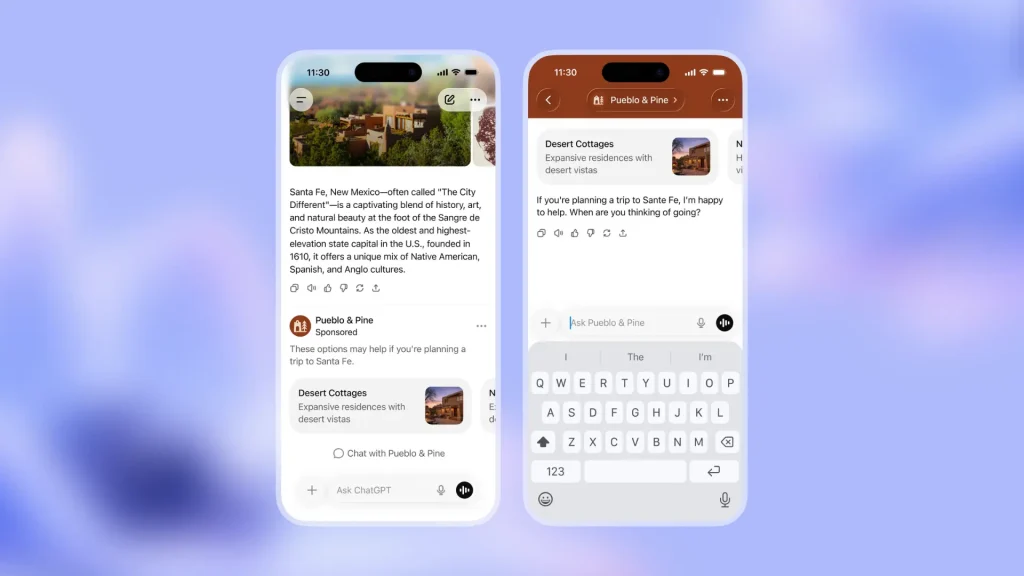
OpenAI has confirmed it will begin testing ads inside ChatGPT for logged-in users in the United States on Free and ChatGPT Go plans. Ads will appear at the bottom of responses when relevant to the conversation and will be clearly labelled and separated from the AI’s answer. Paid tiers like Pro and Enterprise will remain ad-free.
OpenAI has also outlined guardrails for how this will work. Ads will not influence ChatGPT’s responses, and the company says it will not sell conversation data to advertisers. Users will have controls around ad personalisation and the ability to opt out of ads by upgrading.
The Gurus’ take
This is the clearest sign yet that conversational AI is shifting into a discovery environment, not just a productivity tool. For marketers, the important part is the setting. Ads are being introduced inside a space where users are already asking detailed questions, refining what they want and moving closer to a decision.
That makes relevance the make-or-break factor for visibility in ChatGPT. Businesses that can match messaging to the exact moment someone is trying to solve a problem will be better positioned than brands relying on broad awareness copy.
Your action plan
- Identify where your audience is already using conversational AI to research, compare or validate decisions.
- Review existing messaging and refine it to answer specific problems rather than broad brand statements.
- Register your interest in ChatGPT Ads through OMG to access early testing opportunities and promotional offers.
Google Tests Price Labels on Product Images in AI Mode
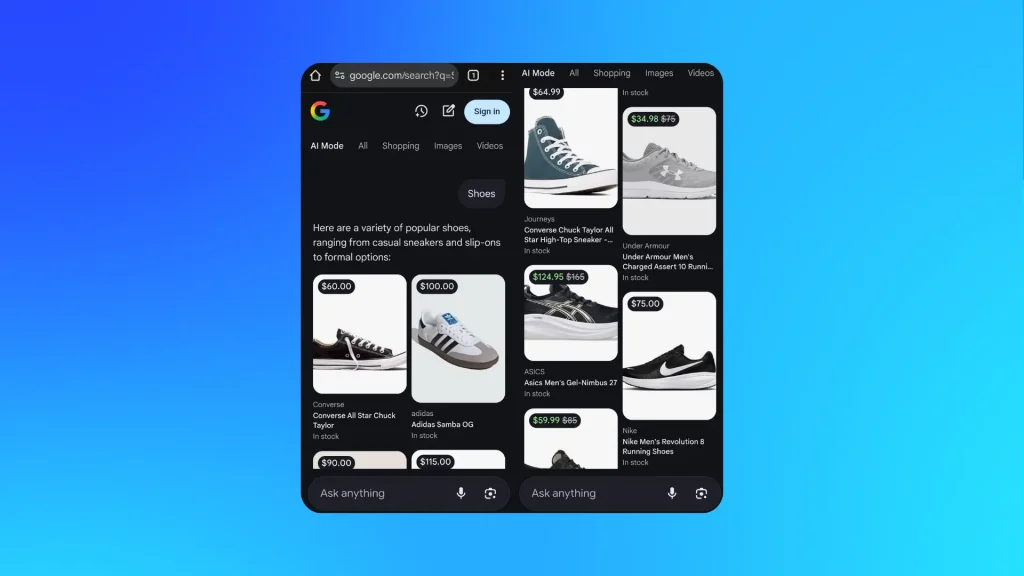
Google is experimenting with price labels in AI Mode results. Instead of appearing only in traditional product listings or panels, the price is displayed on top of the image itself, within the generative layout.
This test blends visual browsing with instant pricing context, potentially changing how users interact with AI-driven shopping results. It also suggests Google is continuing to evolve AI Mode beyond summarising information and into surfaces that support faster product comparison while users are still in the search experience.
The Gurus’ take
Price overlays change behaviour because they remove a step. Users do not need to click to determine whether something fits their budget, which means some products may be filtered out earlier, and some brands may see fewer exploratory clicks even when interest is present.
This also underscores the importance of clean and consistent product information across your ecosystem. When AI surfaces start mixing imagery and price more prominently, inaccuracies become more visible and can affect trust before someone reaches your site. For brands building long-term visibility, this is where generative engine optimisation and product data governance begin to overlap.
Your action plan
- Audit pricing consistency across feeds, landing pages and structured data sources.
- Review key product imagery to ensure it continues to clearly communicate value with price overlays applied.
- Track any early changes in click behaviour from AI-driven search results as these tests expand.
Better CTV Conversions and Search Signals in Google Ads

Google has announced updates to Demand Gen campaigns that add attributed brand search data into reporting, helping advertisers understand how discovery campaigns influence later search activity. This makes it easier to see when a campaign that drove interest turned into a follow-up search on Google or YouTube.
Google is also expanding connected TV conversion functionality, including scannable QR codes inside YouTube Ads viewed on TV screens. In addition, hotel advertisers can connect their Hotel Center feed into Demand Gen to generate dynamic ads with real-time details such as pricing and availability, designed to support direct response.
The Gurus’ take
This is a practical step towards clearer measurement for discovery-led campaigns. Demand Gen often creates interest first, then action later, and without visibility into that path, teams can undervalue the channel or optimise too aggressively towards immediate clicks.
It also shows Google continuing to strengthen performance options on TV inventory. QR codes are not new, but improving how they’re used inside YouTube on TV makes it easier to turn passive viewing into an intentional next step. For pay-per-click advertisers, these updates reward teams that plan the full journey, not just the impression.
Your action plan
- Review Demand Gen reporting alongside brand search trends rather than evaluating it in isolation.
- Test QR-enabled YouTube Ads with landing pages built for fast mobile follow-through.
- Map the full journey from discovery to search to conversion before making optimisation decisions.
Google Ads Data Manager Pushes Smart Product Connection Suggestions

According to Swipe Insight, Google Ads Data Manager now proactively suggests relevant product connections based on the user’s logged-in account context. Instead of advertisers having to hunt for missing integrations, the interface highlights recommended links to tools like GA4, Merchant Center, YouTube and Business Profile, based on what the system believes will improve the account setup.
This update is part of Google’s broader push towards a more connected advertising ecosystem, where campaign performance is increasingly influenced by the quality of data signals flowing into automation. The feature is designed to reduce setup friction and make it clearer when an account is missing connections that affect measurement, audience modelling and optimisation.
The Gurus’ take
This is a subtle UI change with a big implication. Google is making it easier for advertisers to complete integrations because its systems rely heavily on signal depth to optimise effectively. When key products are not connected, automation has less context to work with, which can lead to weaker learning and less stable performance.
For teams subscribed to Google Ads services, this is also a reminder that campaign outcomes are no longer driven only by bidding or targeting choices. Data quality and completeness increasingly determine how well automation can interpret intent, allocate spend and measure results. Strong foundations give you more predictable performance when platforms make changes.
Your action plan
- Check which Google products are currently connected and identify any missing integrations.
- Confirm GA4 events and imported conversions reflect meaningful business actions.
- Prioritise clean data connections before adjusting bids, targeting or creative.
Instagram Drops Explore Ads in 2026

Meta is removing ads from the Instagram Explore feed starting in 2026, meaning advertisers will no longer be able to select Instagram Explore as a placement. When users tap tiles within the Explore grid, they will now be taken into a new immersive Reels viewer rather than the traditional Explore browsing feed where Explore Ads previously appeared.
Meta has also clarified how delivery will shift. Ads targeting Instagram Reels will be eligible to appear in what was previously the Explore browsing experience, while the Explore Home placement remains available. Once the change applies to an account, any ad sets targeting Instagram Explore will automatically distribute delivery across other selected placements.
The Gurus’ take
This matters because placement shifts can change performance even when nothing else changes. Explore has historically functioned as a discovery surface where users browse broadly, and some advertisers relied on it for lower-cost reach or incremental traffic. Removing it can change where impressions are won and what mindset users are in when they see ads.
It also signals how Instagram is reshaping attention. By turning Explore into a Reels-led experience, Meta is consolidating discovery around immersive video. That does not mean every brand must go all-in on Reels, but it does mean creatives that cannot hold attention in a video-first environment may lose efficiency as inventory distribution changes.
Your action plan
- Review historical performance by placement to understand what Explore contributed previously.
- Assess whether your current Instagram Ads perform well in Reels-style environments.
- Adjust delivery expectations as impressions shift into more immersive formats.
TikTok Unveils Ad Options for Streaming Brands

TikTok has introduced new advertising options designed specifically for streaming service providers, focused on turning entertainment discovery into sign-ups and viewership. The new Streaming Ads format is built on Smart+ and is designed to guide users from the TikTok feed into a subscription flow, using interest signals tied to entertainment content to surface relevant titles.
TikTok also announced a New Title Launch ad format aimed at promoting major releases. This format uses high-intent signals such as genre preferences and pricing sensitivity to reach users more likely to convert. TikTok is positioning these formats as part of a larger entertainment push, backed by platform behaviour data showing strong engagement with film and TV content.
The Gurus’ take
This update shows TikTok continuing to move up the funnel and down it at the same time. It remains a discovery engine, but it is also investing in formats that make conversion paths clearer for advertisers, especially in categories where interest can be high but attribution is messy.
Even if you are not in streaming, the direction is relevant. TikTok is building more vertical-specific ad products that reduce friction between interest and action. Brands that can connect creative to a clear next step will benefit most as TikTok’s Ads Manager ecosystem becomes more outcome-focused.
Your action plan
- Align creative with a single, clear action rather than broad awareness messaging.
- Ensure landing experiences load quickly and keep users focused on the next step.
- Track post-conversion quality signals, not just sign-ups or installs.
Meta Expands Ads on Threads Worldwide

Meta has confirmed the global rollout of ads on Threads, expanding access beyond early test regions to all eligible advertisers. Ads appear natively within the Threads feed and support familiar formats such as image, video and carousel. Advertisers can include Threads placements within existing Meta campaigns, allowing reach expansion without building new campaign structures.
Ad delivery is expected to scale gradually, with user experience and engagement signals guiding rollout pace.
The Gurus’ take
Threads operates in a different attention state compared to Instagram or Facebook. Users are scrolling to read and respond, not to browse polished visual content. As a result, ad performance is more closely tied to message relevance and clarity than production value.
This creates an opportunity for brands with strong positioning and clear value propositions. Ads that feel aligned with conversation themes are more likely to be noticed, while generic brand messaging risks blending into the background. Remember: Threads rewards relevance over spectacle.
Your action plan
- Separate Threads performance in reporting to understand how it behaves independently.
- Test copy-led creative that fits conversational, text-first environments.
- Use Threads as incremental reach rather than replacing established placements.
TikTok Improves Control in Smart+ Campaigns
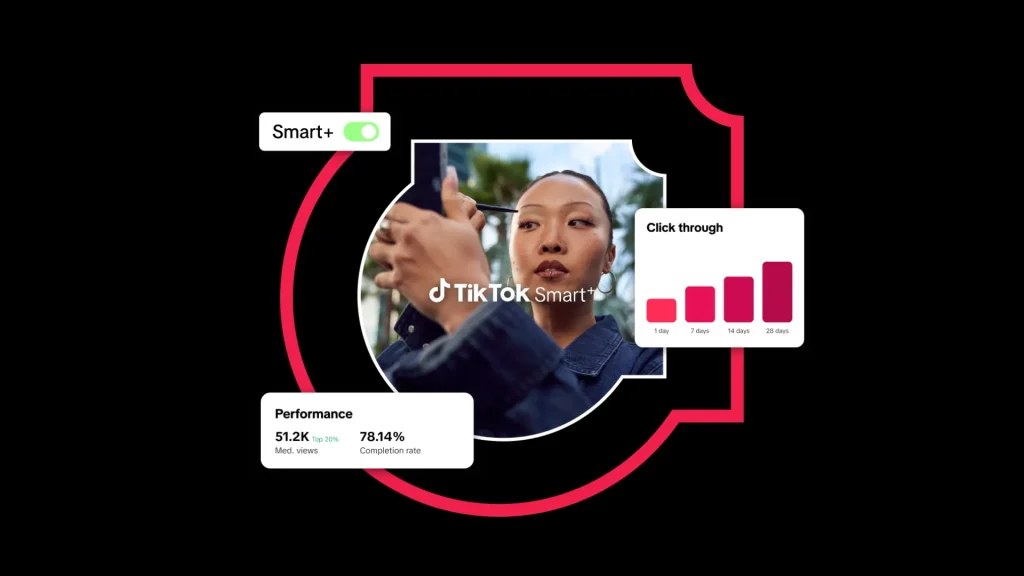
TikTok has introduced new control features within its Smart+ campaigns, expanding advertiser visibility and flexibility. These updates include enhanced creative selection, previews of all creative combinations before launch and workflow tools such as duplication, draft mode, automated rules and bulk editing.
The Gurus’ take
One of the biggest barriers to automation adoption has been trust. When advertisers cannot see what will run, confidence drops. Creative previews and operational controls directly address that issue by making automation more transparent.
This also signals that TikTok expects more advertisers to rely on Smart+ going forward. As automation becomes standard, the role of marketers shifts from hands-on delivery to input quality, guardrails and interpretation of results.
Your action plan
- Use creative previews to review how assets will be combined before campaigns go live.
- Set clear guardrails with automated rules to manage pacing and spend.
- Supply Smart+ campaigns with varied creative inputs to support better learning.
Pinterest Launches Media Planner for Better Campaign Control
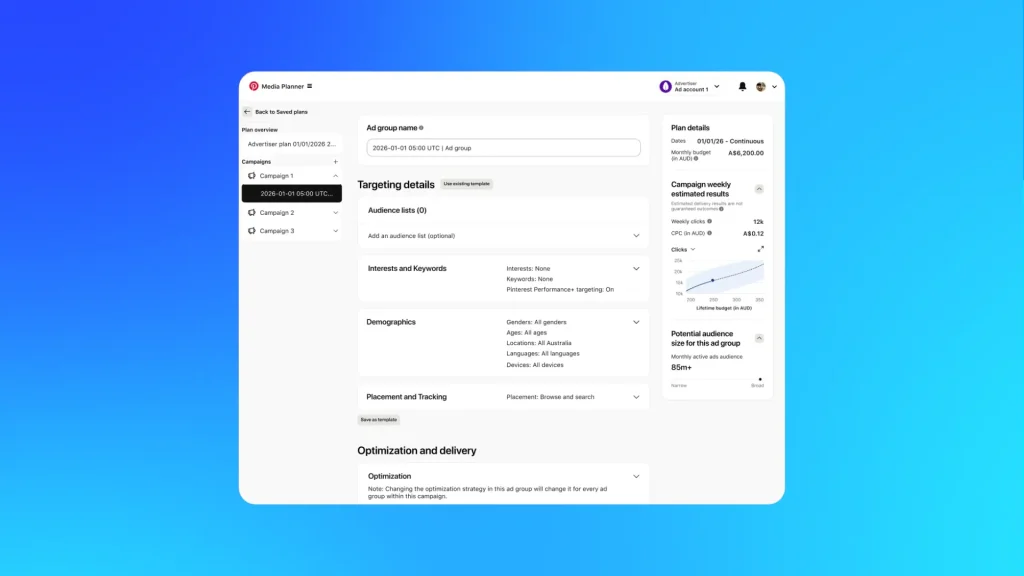
Pinterest has released a built-in Media Planner within Ads Manager, designed to help advertisers plan, budget and organise campaigns in a single interface. The tool allows users to explore audience segments, estimate potential outcomes and model different scenarios based on budget, timing and campaign objectives.
By embedding planning directly into the platform, Pinterest Ads also reduces reliance on external spreadsheets and manual forecasting.
The Gurus’ take
Pinterest is a platform where intent often builds over time. Users browse to save, plan and return later, which makes upfront planning particularly valuable. The Media Planner supports this behaviour by encouraging advertisers to think about structure and timing before launching.
For marketers, the benefit lies in expectation setting. While projections are not guarantees, they help teams avoid under-investing in tests or overspending without a clear plan. This is especially helpful for upper-funnel activity, where outcomes are harder to evaluate quickly.
Your action plan
- Use the Media Planner to compare budget and timing scenarios before launch.
- Document assumptions around reach and outcomes early.
- Review projected results against actual delivery to refine future planning.
TikTok Drops Official AI Campaign Guide for Marketers
TikTok has released an official guide focused on helping advertisers understand and use its AI-powered campaign tools, with particular emphasis on Smart+ campaigns. The guide walks through campaign setup, creative structure, optimisation workflows and how TikTok’s systems interpret signals such as user behaviour, engagement and conversion feedback.
The Gurus’ take
Official platform guidance matters because it reveals how success is defined internally. When advertisers align campaign setup with how TikTok evaluates performance, they reduce friction during learning periods and avoid unnecessary resets caused by misaligned inputs.
This guide also signals that AI-led campaigns are no longer an advanced option reserved for select advertisers. They are becoming the default path for scaling on TikTok. Teams that treat Smart+ as a black box risk misinterpreting results or making reactive changes that disrupt performance.
Your action plan
- Review the guide alongside existing Smart+ campaigns to spot structural gaps.
- Check that objectives, creative groupings and conversion signals align with TikTok’s recommendations.
- Run controlled tests comparing AI-led and manual formats using the same goals.
Stay ahead of platform shifts with Online Marketing Gurus
AI-led discovery, evolving ad formats and stronger data are reshaping how performance is earned across channels. The biggest risk for businesses and marketers right now is not missing a single update, but reacting without a clear plan as platforms continue to change how visibility is created and measured.
If you want help turning these AI SEO and paid updates into a more resilient strategy, the Gurus are already testing what works so you don’t have to. Contact us now for a free strategy session and start putting these changes to work.

About the Author
Andrew Raso
Share


